
Soothing Face Lotions to Calm Redness and Repair a Damaged Skin Barrier
The Best Soothing Face Lotions to Calm Redness and Repair a Damaged Skin Barrier. Summer is a double-edged sword. We enjoy the sunshine, beach days, and warm evenings, but our skin often suffers.
UV exposure, sweat, chlorine, and air conditioning may rapidly turn your face into a hot mess, literally. You are not hallucinating persistent redness, stinging when you apply your normal creams, or a tight, “cracked” feeling. Your skin’s barrier is damaged.
What is the good news? You don’t need a 12-step procedure to fix things. You need the proper lotion. In this guide, we’ll go over the finest soothing face creams for reducing redness and repairing your skin’s protective shield, with a focus on summer survival.
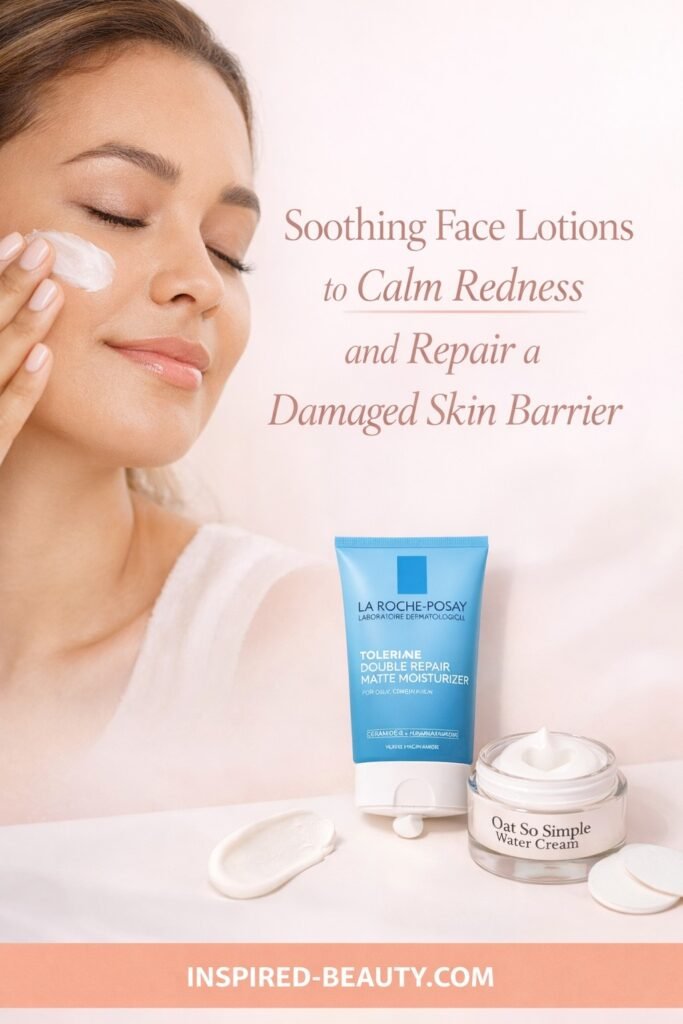
Table of Contents
Why Face Lotions Are Important (Beyond Just Moisture)
Many people think lotion is just about fighting dry skin. In reality, a high-quality face lotion does three critical things.
It protects the skin barrier, a tiny film of lipids (fats) that keeps water in and bacteria, pollution, and allergies out.
It regulates pH, Healthy skin has a slightly acidic pH (4.7-5.5). Harsh soaps, sweat, and sunlight can all elevate the pH, resulting in bacterial overgrowth. Lotions assist in rebalancing this.
It decreases irritation. For people with rosacea, eczema, or general sensitivity, the proper lotion serves as a cooling compress, interrupting the inflammatory cascade before full-blown redness occurs.
Without a proper lotion, your skin overcompensates by producing more oil (clogging pores) or becomes so dry it cracks and bleeds. During summer, skipping lotion is actually one of the fastest ways to ruin your complexion.
Best Tanning Lotion For Tattoos
How to Reverse Premature Wrinkles Effective Strategies for Youthful Skin
What to Look For When Buying Face Lotion in Summer
Summer is not winter. You don’t want a heavy, occlusive balm. Here is your summer-specific checklist.
Texture. Search for “gel-cream,” “water cream,” or “fluid.” These absorb in seconds and do not slip off your face in the heat.
Non-Comedogenic. This is not negotiable in the summer. Sweating combined with excessive oil causes acne. Make sure the label reads “won’t clog pores.”
Ceramides and Niacinamide. These two substances are the gold standard for barrier repair that is free of grease.
No denatured alcohol. While alcohol helps lotions feel lighter, it removes the barrier, resulting in rebound redness. Avoid it.
Soothers were added. Look for aloe, centella asiatica (cica), oats, and green tea. These chill the skin upon contact.
SPF is a separate factor. Do not rely on your moisturizer to provide sun protection. You require a certain sunscreen. Your lotion’s role is to repair under the SPF.
Other Seasonal Face Lotion Shopping Tips & Guide
The Fridge Test, In the summer, keep your soothing lotion in the mini-fridge. The cold constricts blood vessels, reducing redness, and feels great on sunburned cheeks.
Layering without suffocating. Summer skin breathes better with thin layers. Apply the lotion, wait 60 seconds, and then apply sunscreen. If your face feels sticky, you applied too much lotion.
Avoid Active Ingredients in the Morning. Do not include retinol or AHAs in your morning summer lotion. UV light destroys them while increasing photosensitivity. Save those for the night.
Humidity check. If you live in a humid region, such as Florida or Southeast Asia, apply a hyaluronic acid serum first, followed by a light lotion. If you live in a dry summer climate, such as Arizona or Spain, apply a squalane-based lotion to lock in moisture.
Barrier-Repair Cheat Sheet, What Ingredients to Look For
When your skin is acting up, turning the bottle around to read the ingredient list might be like deciphering ancient code. However, matching the proper substance to your unique skin problem is the key to immediate treatment.
Here’s a fast reference guide to the most soothing substances on the market and what they do for your skin.
Ceramides (NP, AP, and EOP).
What It Does. Ceramides can be thought of as the “mortar” that holds your skin’s cells together. They physically repair and seal your moisture barrier.
Ideal for. A highly damaged skin barrier, peeling, or sunburned skin.
Niacinamide (vitamin B3).
What it Does. This potent multitasker decreases overall redness, visibly tightens the appearance of pores, and even stimulates your skin to generate more of its own natural ceramides.
Best for. Rosacea, acne-prone skin, and overall blotchiness.
Centella Asiatica (CICA)
What it Does. Cica, a popular ingredient in K-Beauty “Tiger Grass” products, promotes wound healing and actively soothes inflamed nerve endings in the skin.
Best for. After sun exposure, you may experience burning or stinging skin after applying ordinary lotion.
Panthenol (provitamin B5)
What it Does. A deep-penetrating humectant that draws water into the skin while also easing the severe itching associated with dryness.
Best for. Eczema flare-ups and extremely inflamed, itchy skin regions.
Squalane
What it Does. This ingenious substance accurately mimics your skin’s natural oils. It works as a protective shield, locking in moisture without feeling heavy or clogging pores.
Best for. Dehydrated skin that remains greasy or prone to breakouts.
Colloidal oatmeal (oats)
What it Does. A traditional anti-inflammatory powerhouse. It creates an invisible, soothing physical barrier on the skin, protecting it from harsh environmental irritants.
Best for. Skin is extremely sensitive and reactive, and it becomes angry easily.
Green tea (EGCG)
What it Does. Green tea contains powerful antioxidants that actively neutralize environmental stress and minimize UV-induced redness and edema.
Best for. Anti-aging properties mixed with daily skin relaxation.
Allantoin
What it Does. A distinctive double-whammy element. It gently encourages dead skin cells to shed while also relaxing and smoothing the new skin beneath.
Best for. Rough, rough skin that cannot tolerate harsh face cleansers.
Tips. If your skin is now stinging or red, search for a lotion that contains Ceramides (to rebuild) and Cica or Panthenol (to relieve the acute burn). Avoid artificial fragrances and essential oils till your skin recovers!
Face Lotion Life Hack
The Slugging Light Hack, which involves slathering Vaseline all over, is bad for summer. Instead, in your hand, blend 3 drops of cold-pressed grapeseed oil high in linoleic acid that is not comedogenic.
Apply this at night, after the air conditioner has dried up your room. The oil functions as a breathable seal, retaining the calming chemicals while enabling sweat to evaporate. You’ll wake up with no redness.
Q&A
My skin feels tight after I apply lotion. What’s wrong?
Your barrier is likely stripped of natural moisturizing factors (NMFs). Switch to a lotion containing urea or glycerin (not hyaluronic acid alone). Also, apply lotion to damp skin, not dry skin.
Can a lotion actually cure redness permanently?
No. Redness from rosacea, genetics, or broken capillaries requires lasers or prescriptions. However, a soothing lotion can reduce temporary redness (from heat, friction, or mild irritation) by 80% within 30 minutes.
I have oily, red skin. Should I skip moisturizer?
Absolutely not. Oily skin is often dehydrated skin. When you skip lotion, your oil glands panic and produce more sebum. Use a niacinamide-based gel lotion; it will reduce both redness and oil.
Can I use body lotion on my face in a pinch?
Only if it is fragrance-free and labeled for face/body. Most body lotions contain heavier oils (coconut, shea) that will clog facial pores and cause “perioral dermatitis” (red bumps around the mouth).
Recommended Face Lotions for Summer
These are the current top performers for soothing redness and repairing damage in hot, humid conditions.
Aveeno Calm + Restore Oat Gel Moisturizer
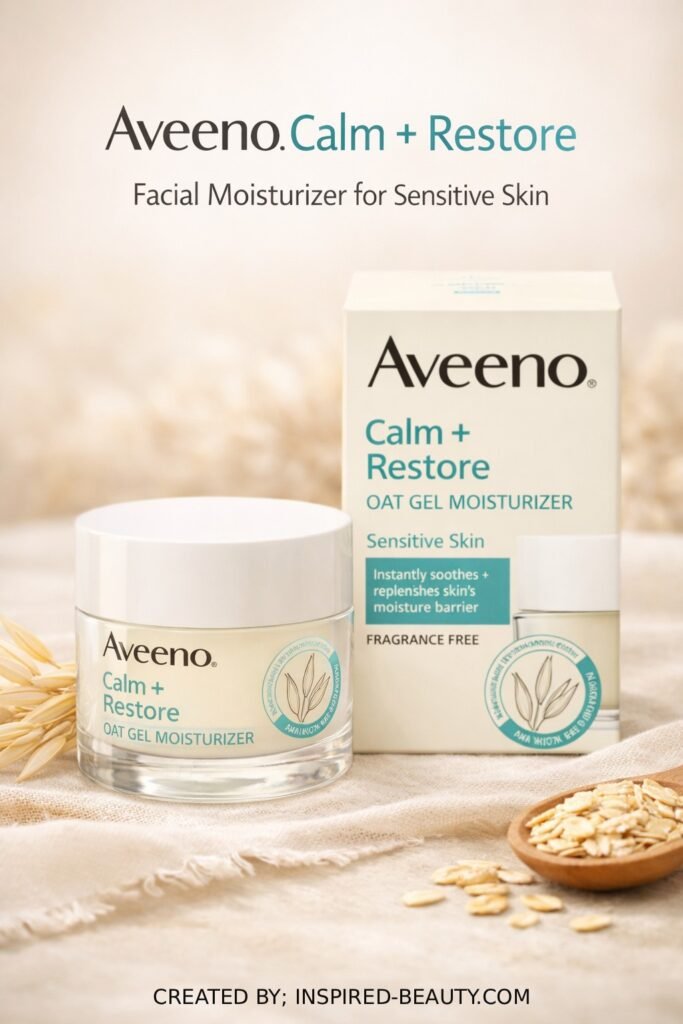
Why, it’s the gold standard for summer. It uses prebiotic oat and feverfew. It absorbs in 10 seconds, doesn’t pill under SPF, and stops “heat flush” within minutes.
Dr. Jart+ Cicapair™ Tiger Grass Calming Gel Cream
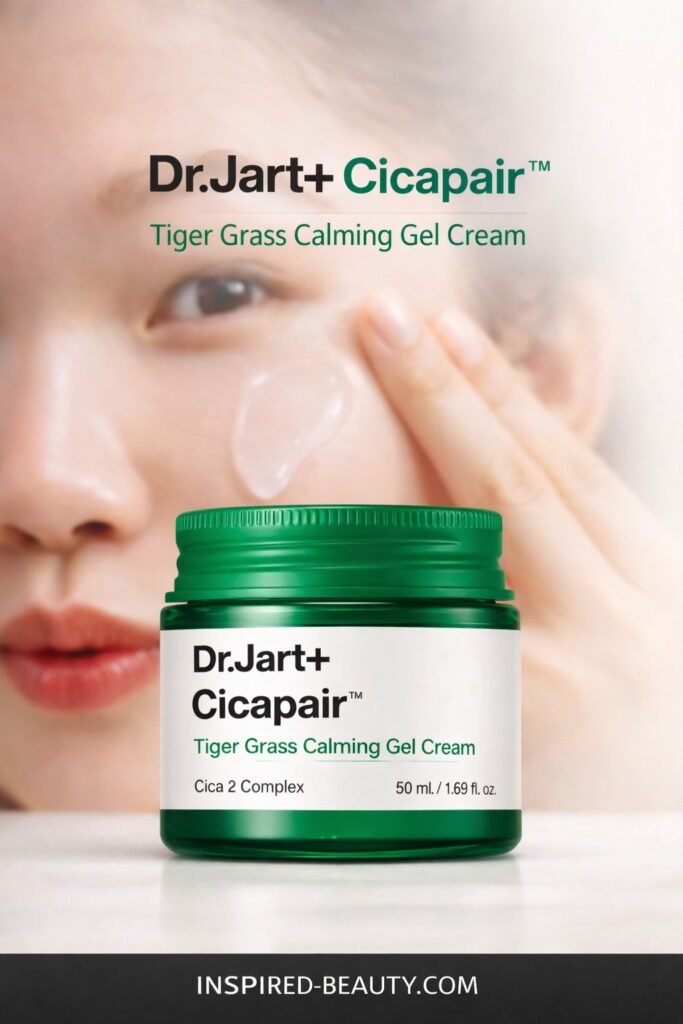
Why, this is a transparent, cooling gel containing centella asiatica. It feels like applying aloe to a sunburn. It is specifically intended for skin that becomes red as soon as you step outside.
CeraVe PM Facial Lotion (Yes, use it in the AM too)
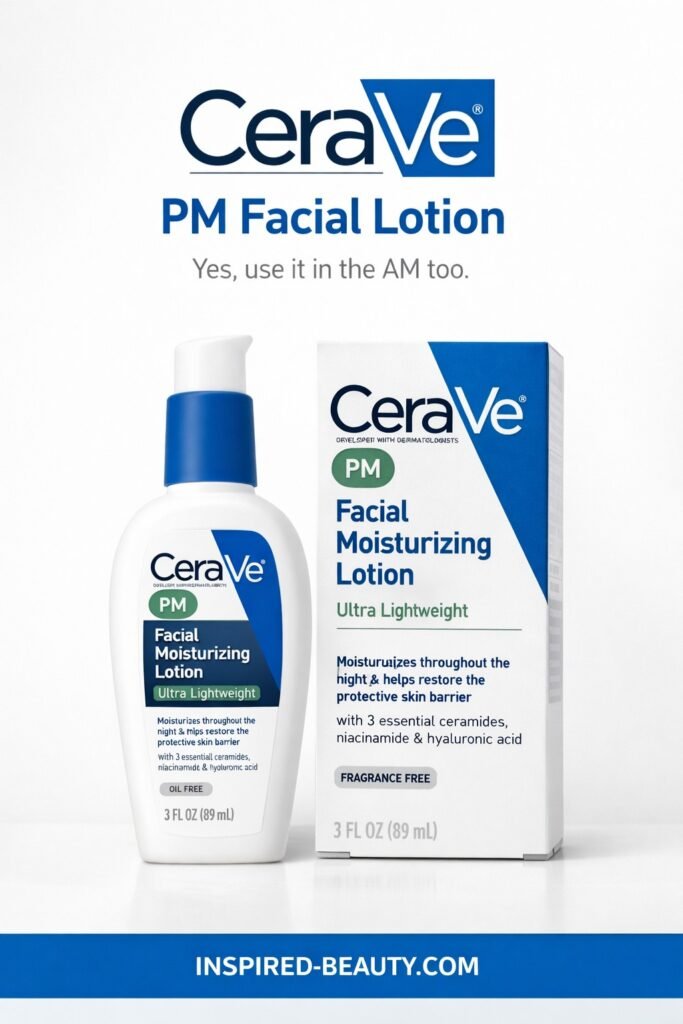
Why, it contains 4% niacinamide and three important ceramides. The product is oil-free, lightweight, and affordable.
For further information, please visit the website of the company.
16. For restoring a damaged barrier, this outperforms 80 creams.
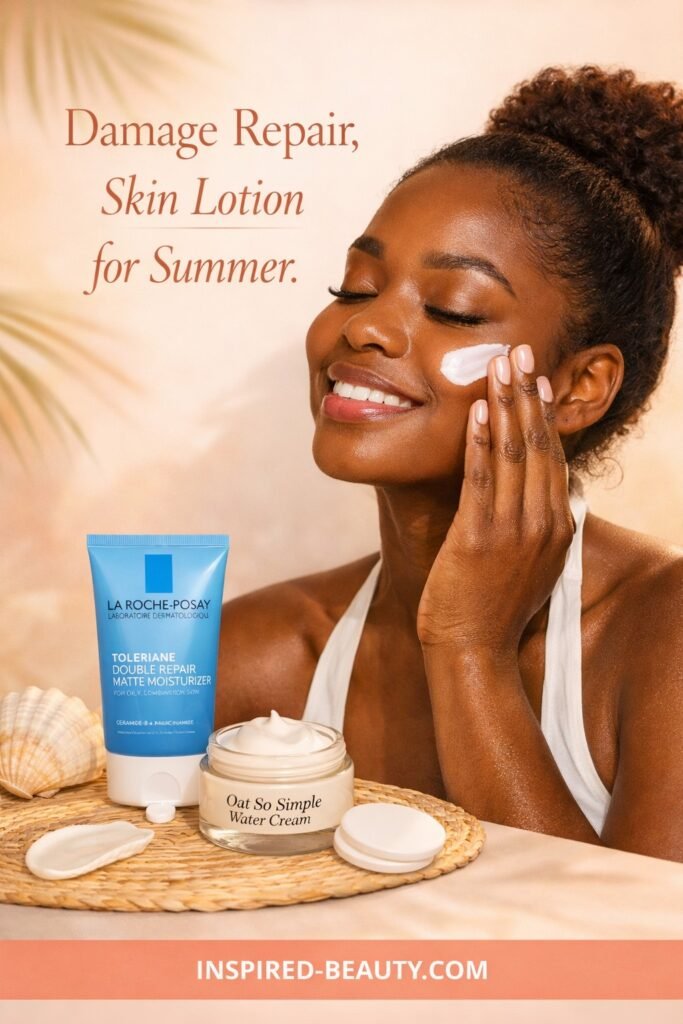
Krave Beauty Oat So Simple Water Cream
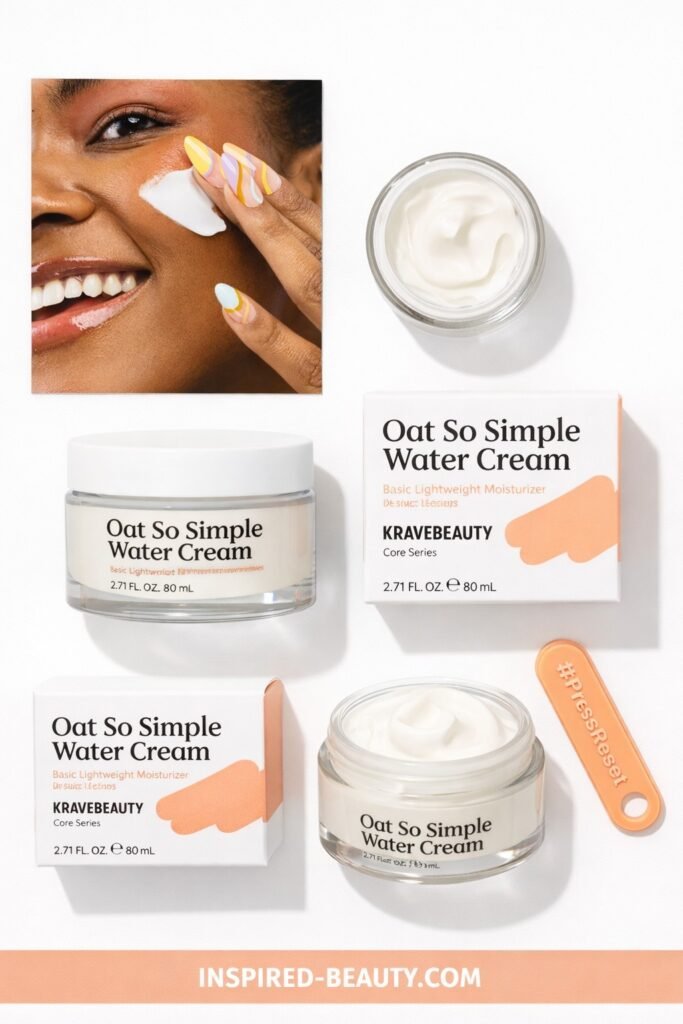
Why? Only nine ingredients. No fillers. If you are allergic to everything, this is the answer. It is quite boring, exactly what angry, red skin requires.
La Roche-Posay Toleriane Double Repair Matte Moisturizer
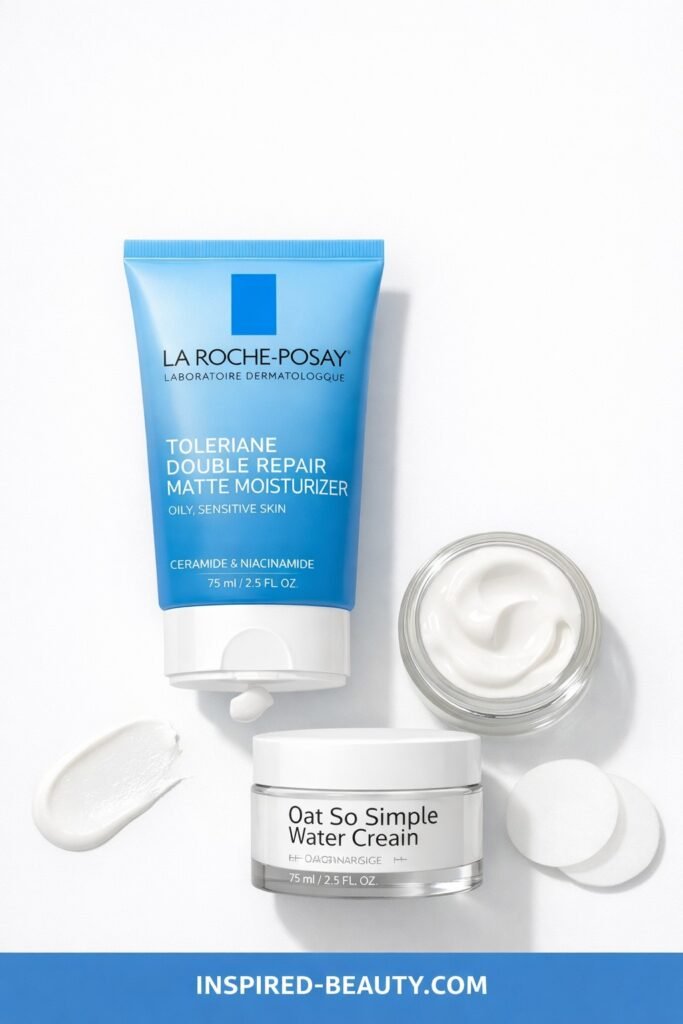
Why? Designed for oily, red skin. It contains ceramide-3, niacinamide, and perlite (which absorbs sweat). It reduces the oily shine of summer while soothing the sting.
Seasonal Face Lotion Guide, Fall, Winter, Spring
Your summer lotion won’t work in January. Here is your seasonal roadmap.
Fall (Transition/Wind Exposure)
Needs a somewhat richer texture to resist cool winds without being too heavy.
Look for Squalane + Oatmeal.
Recommended Product: Ordinary Natural Moisturizing Factors + Beta Glucan. Beta glucan is an autumn superfood that prepares skin for cold weather by increasing immunological resistance.
Winter (Harsh / Heating Inside)
Occlusives are required to prevent water loss due to heated indoor temperatures. Creams are not lotions.
Look for Shea butter, petrolatum (in limited quantities), and urea.
Recommended product: Skinfix Barrier+ Triple Lipid-Peptide Cream. It’s thick, yet it is the only thing that prevents “winter redness” (chapping).
Spring (allergy season/pollen)
Requires antihistamine-like calming. Hypoallergenic.
Look for: chamomile, bisabolol, and madecassoside.
Recommended product: Bioderma Sensibio Defensive Active Soothing Cream. It selectively inhibits the skin receptors that respond to pollen and pollutants.
How to Use Face Lotion (Step-by-Step)
Most people pat lotion on wrong. Here is the correct way to apply lotion to your skin and face.
Cleanse with a lukewarm, non-foaming cleanser.
Don’t dry your face. Keep it dripping moist.
Apply a toner or serum (optional but improves absorption).
Dispense 1 pump (for light) or 1 pearl-size drop (for thicker).
Warm it between your fingertips for three seconds.
Press instead of rubbing. Rubbing generates friction, which causes redness. Apply the lotion on your cheeks, forehead, chin, and neck.
Wait 90 seconds. Allow it to fully absorb before applying sunscreen or makeup.
5 Tips for Best Use
The “Reverse Sandwich” for Retinol. If you use retinol at night, first apply soothing lotion, then retinol, and finally more soothing lotion. This reduces irritation by 70% while preserving the anti-aging properties.
Post-Workout Treatment. Increased redness following exercise. Keep a tiny spray bottle of thermal water (Avène or La Roche-Posay) and a dime of soothing lotion in your gym bag. Apply soon after rinsing sweat away.
Avoid touching your face for 5 minutes after application. Touching causes friction, which dislodges the protecting coating.
Patch test behind your ear, not your inner arm. In the summer, the skin behind your ears becomes hot and sticky, just like your face.
Use less on your forehead. The forehead contains more oil glands. Too much lotion here leads to “closed comedones” (small flesh-colored lumps). Concentrate the product on your cheeks and chin, which are the driest, reddest areas.
Your skin’s redness is a cry for help, not a life sentence. By switching to a relaxing, summer-appropriate lotion with the right ingredients (ceramides, niacinamide, cica) and applying the pressing technique, you can heal a broken barrier in as little as three days. Do not let the heat win. Stay cool and moisturized, and let your lotion do the heavy lifting.